Case Study
AI-accelerated
skill-building

Case Study
AI-accelerated skill-building
Learning to code custom ServiceNow and Drupal themes and features, using conversational AI as a coach.
Background
Learning New Platforms
When Sheridan’s ServiceNow portals needed brand alignment and a UX pass, I was brought onto the project based on my front-end skills and delivery track-record. the platform was new to me. AI compressed the learning curve enough to ship without slowing down.
The Drupal migration running in parallel created a second opportunity. With a potential contract extension on the horizon, I started learning Drupal ahead of time. the build became an onboarding resource for the rest of the web team – useful regardless of whether my contract extended far enough to contribute to the Durpal site directly.
ServiceNow
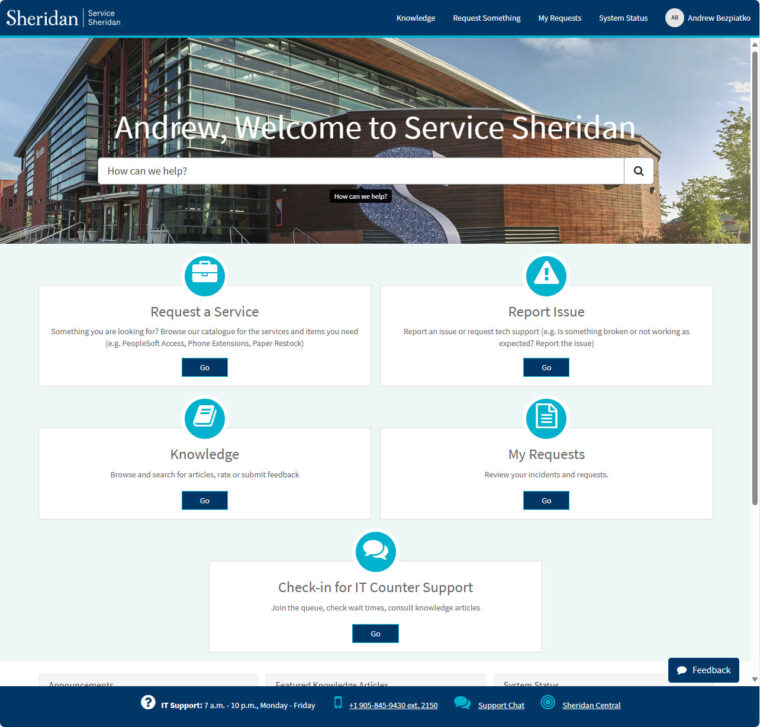

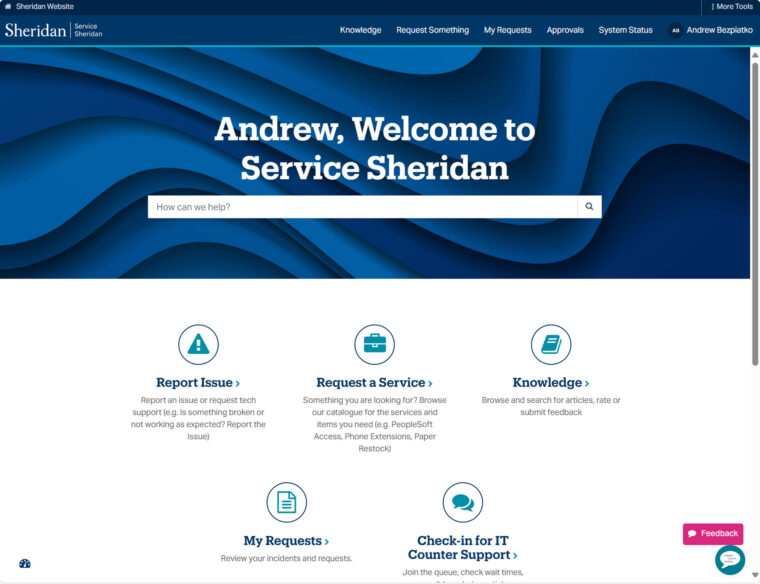
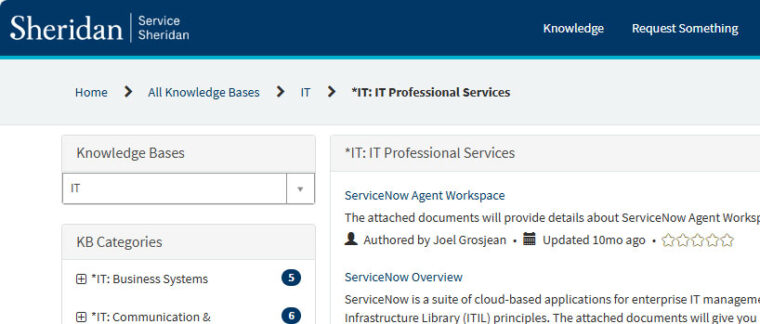
Sheridan’s service portal home page (before SDS implementation)
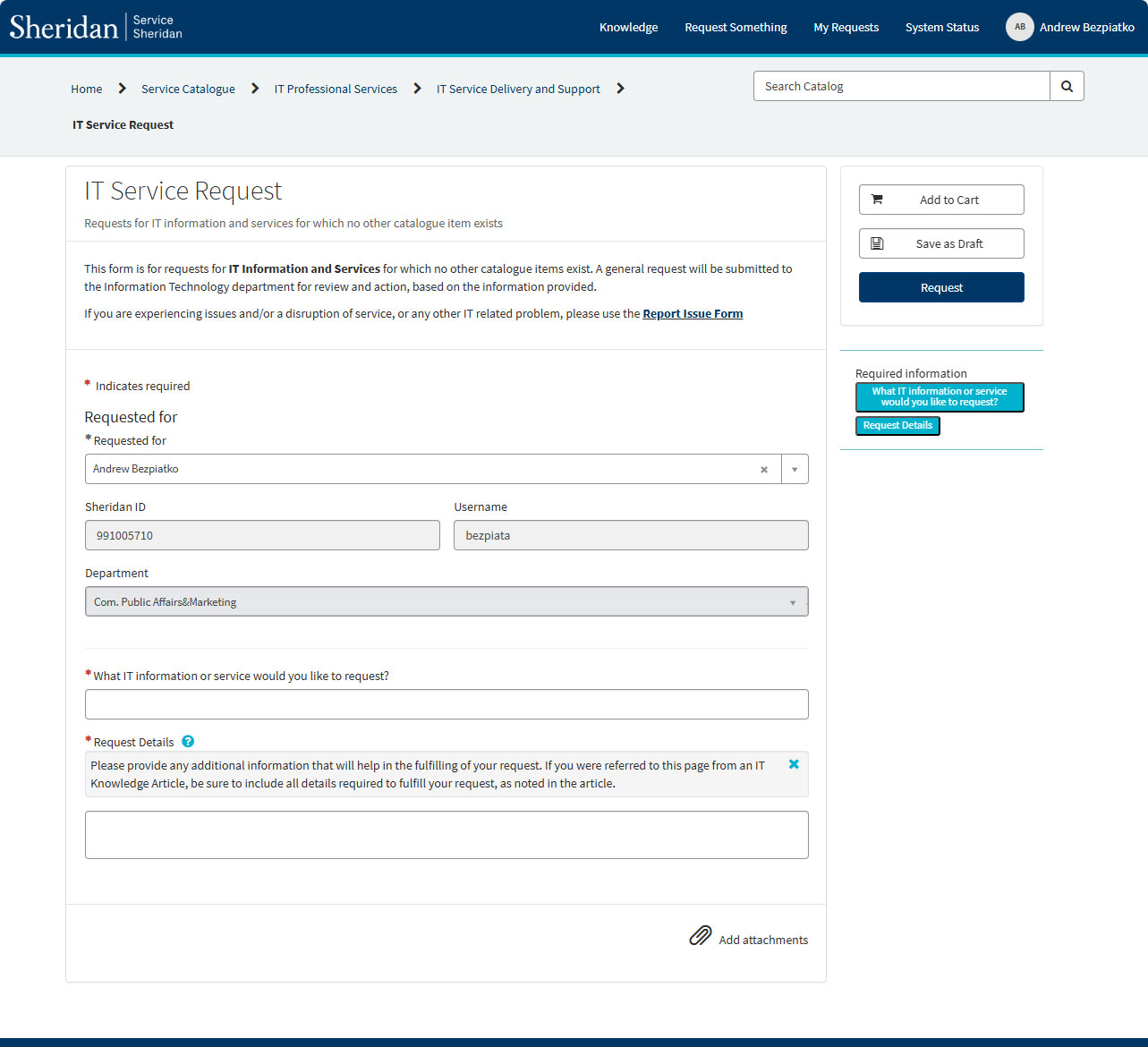
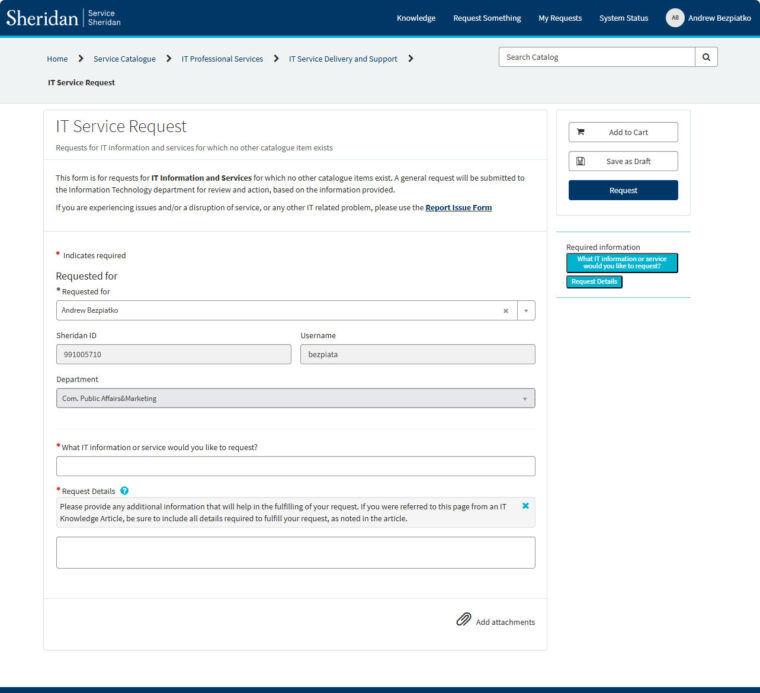
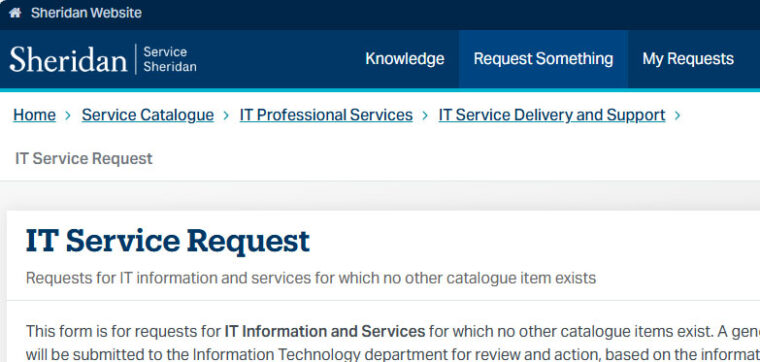
Sheridan’s service portal request page (before SDS implementation)
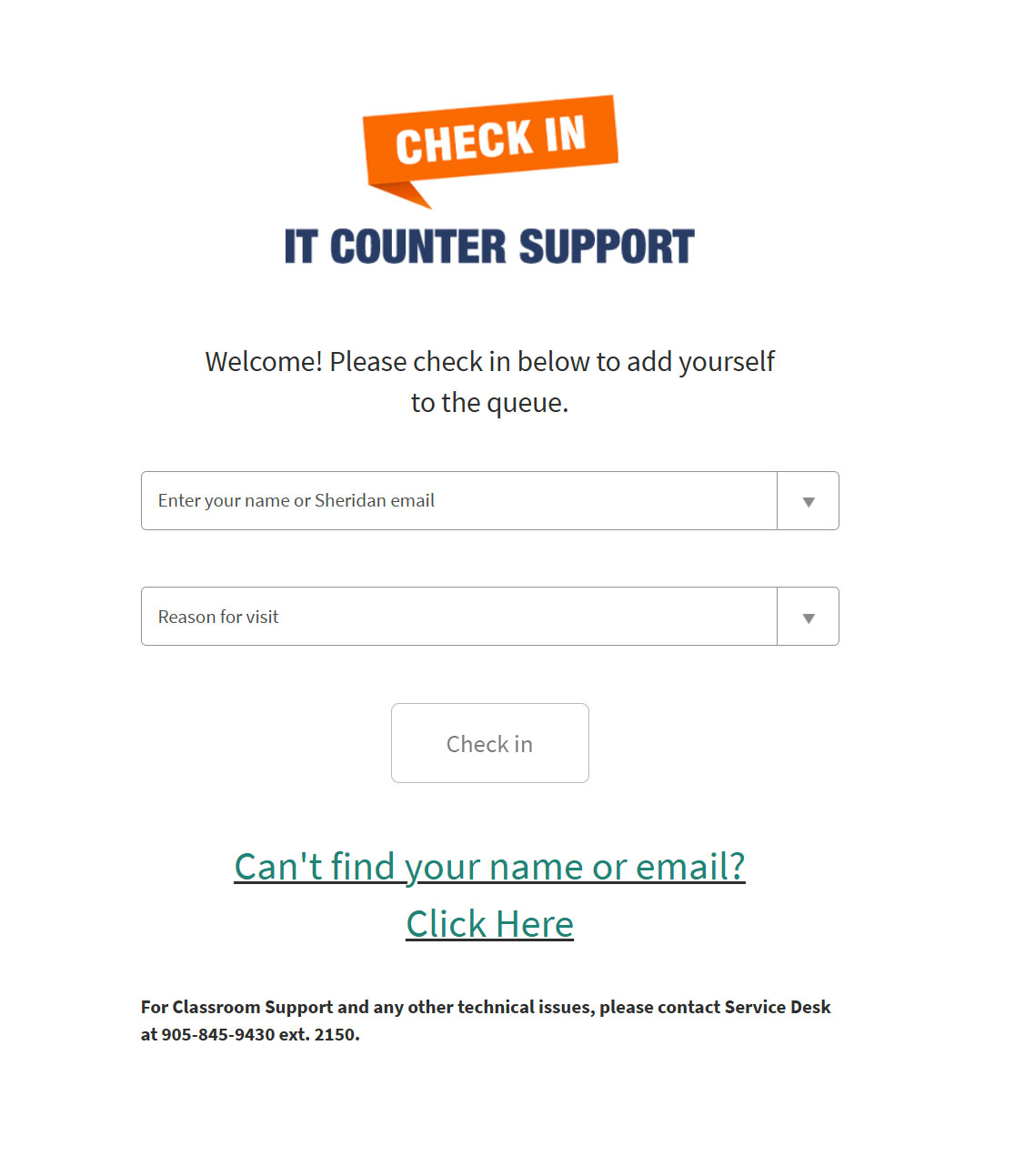
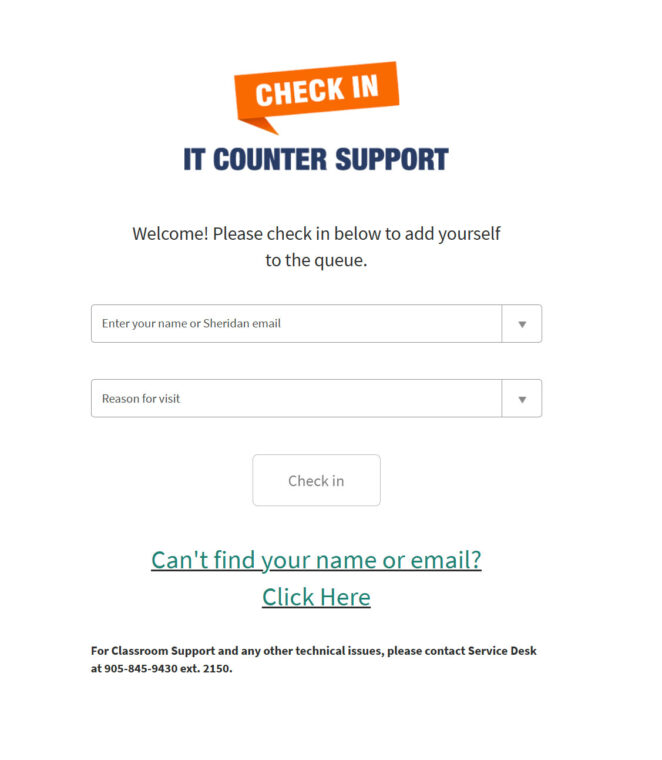
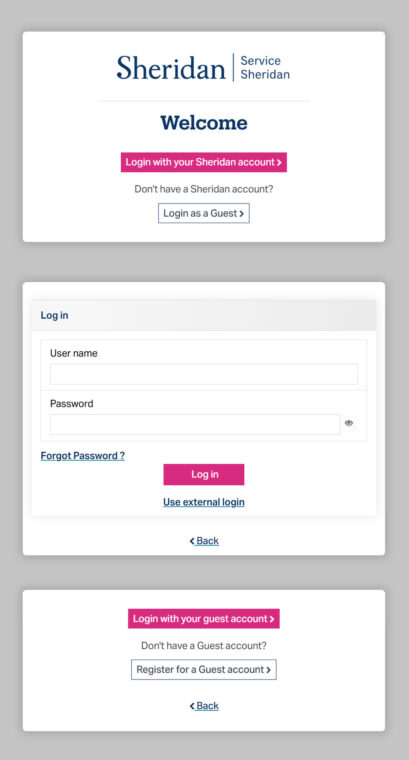
Sheridan’s service kiosk login screen (before SDS implementation)
ServiceNow platform challenges
ServiceNow’s admin UI is visually uniform and the underlying framework is complex – orienting myself took longer than a more familiar platform would have. Troubleshooting was slower on two fronts: a CSS compiler that failed silently, and Angular-related issues I didn’t yet have the experience to diagnose quickly.
AI helped ship service portal updates
ChatGPT functioned as an on-demand mentor – helping me digest documentation faster, troubleshoot a CSS compiler that was failing silently, and work through Angular-related issues I didn’t the background to diagnose alone. It didn’t replace the troubleshooting, but it shortened the path to understanding what I was looking at.
The result was a faster feedback loop on an unfamiliar platform, which meant the project didn’t stall while I was getting up to speed.
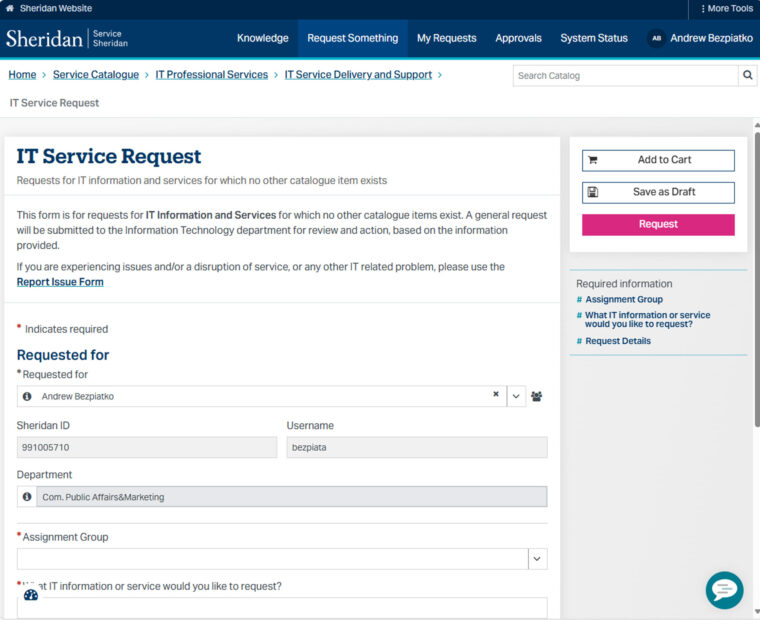
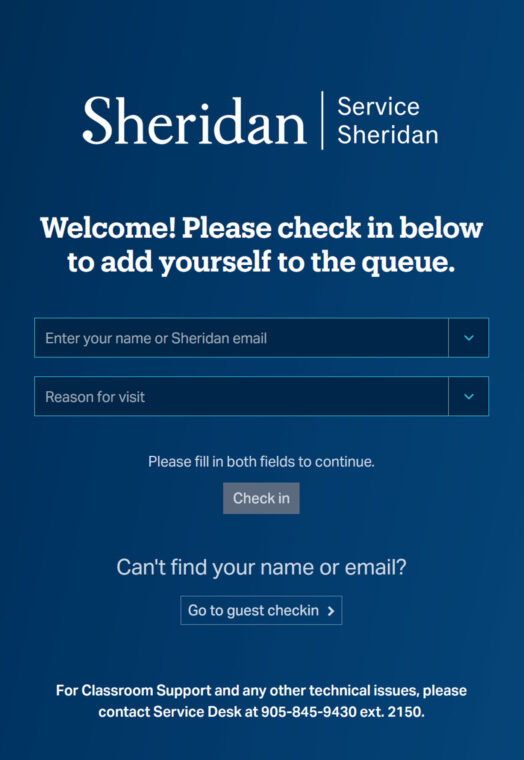
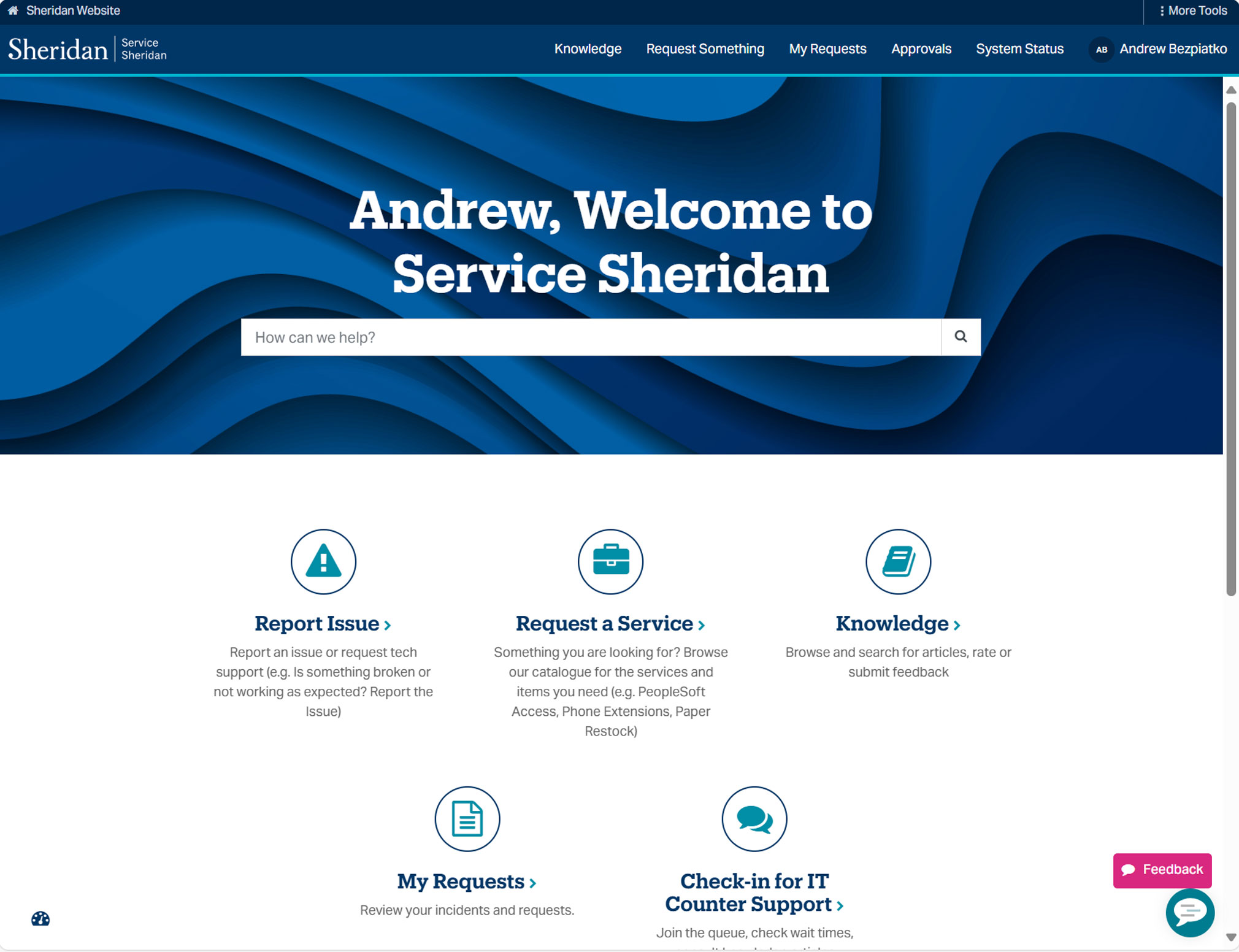
Sheridan’s service portal request page (after SDS implementation)
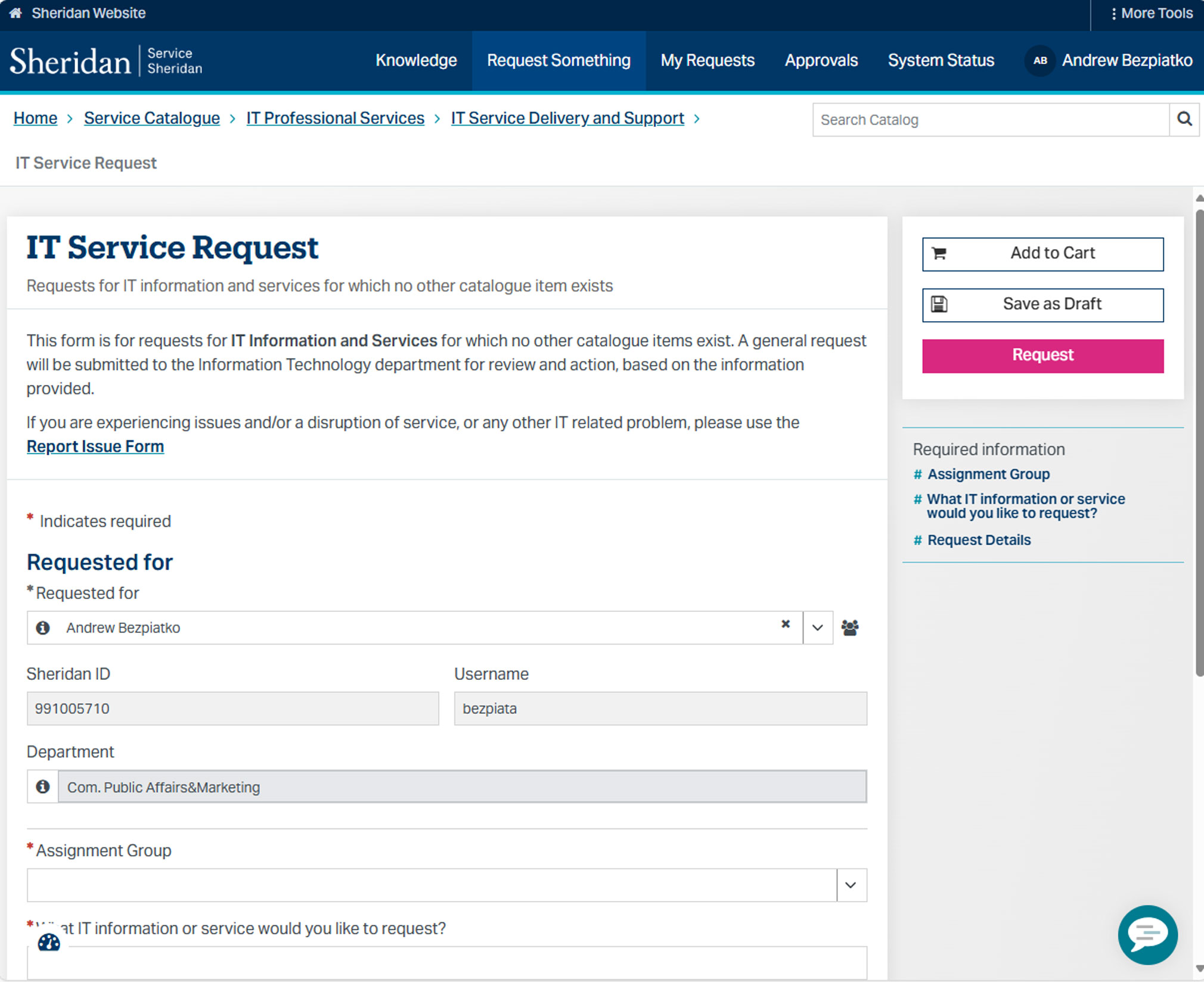
Sheridan’s service portal request page (after SDS implementation)
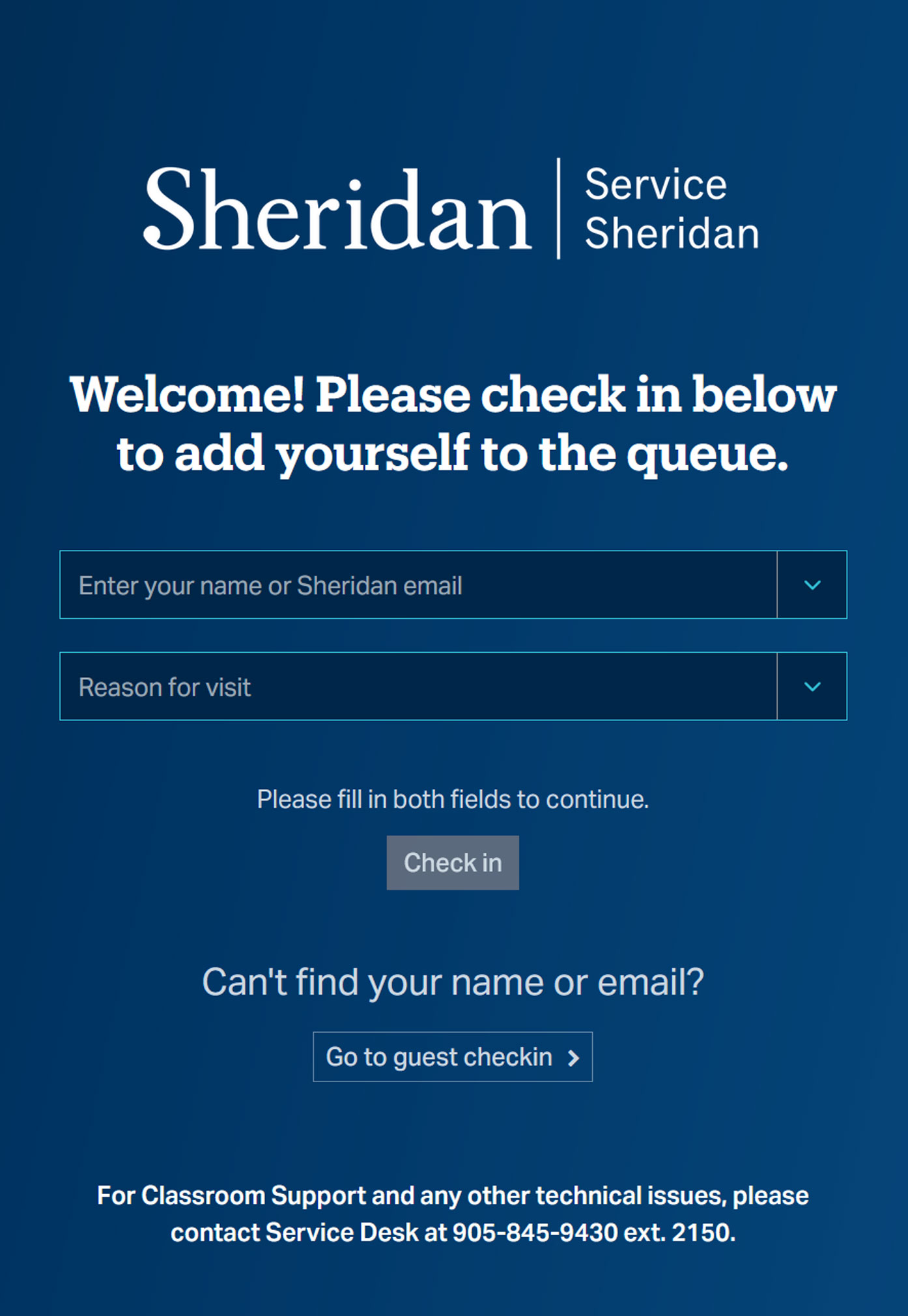
Sheridan’s service kiosk login screen (after SDS implementation)
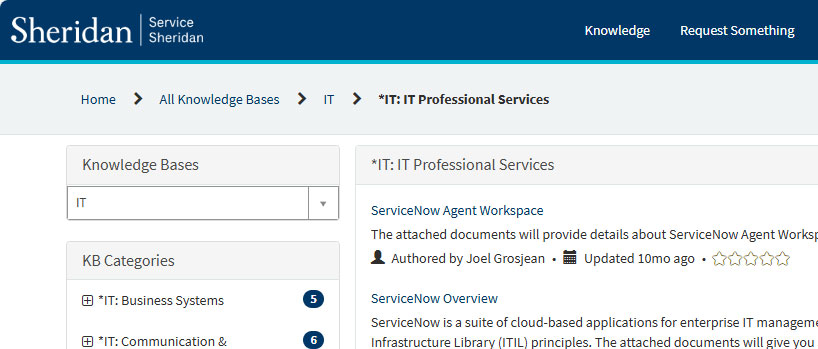
Broken ServiceNow breadcrumbs exposed admin-only items in end-user pages and sometimes flipped between admin and user variants. The inconsistent navigation context was confusing and frustrating.
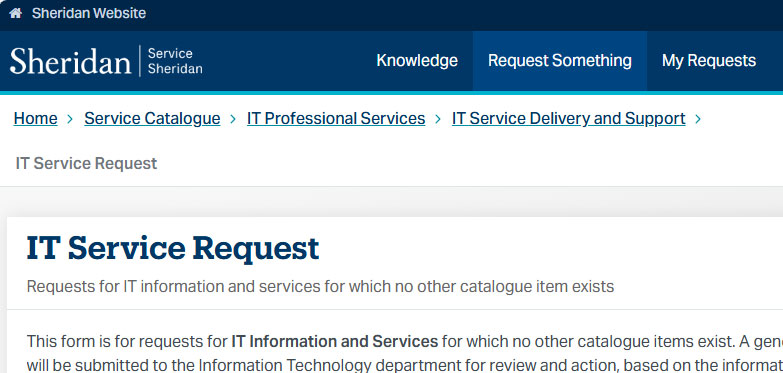
After considerable effort, and a lot of back and forth with my digital mentor, I fixed the inconsistent breadcrumbs
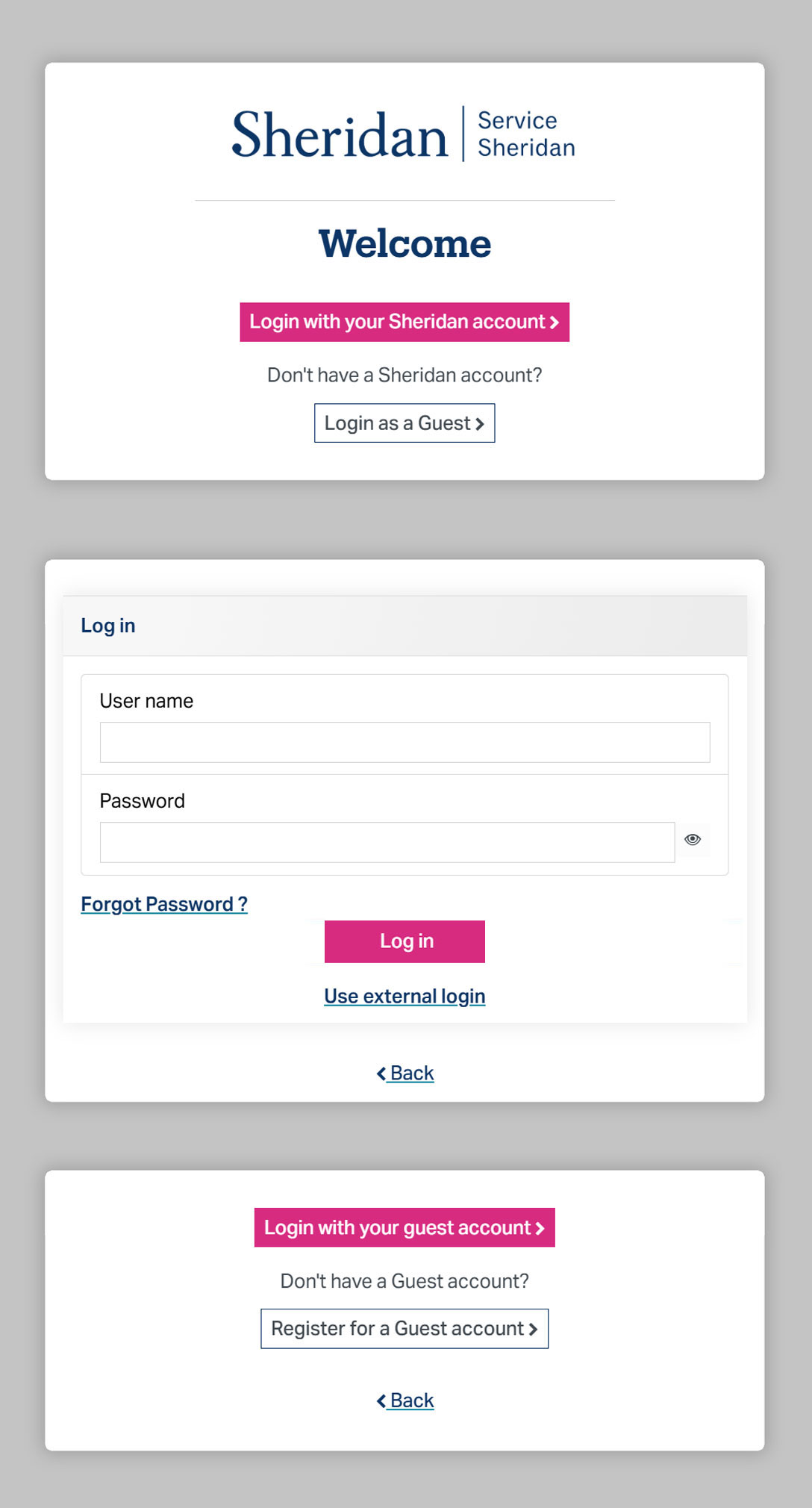
Modal instances from the improved login flow
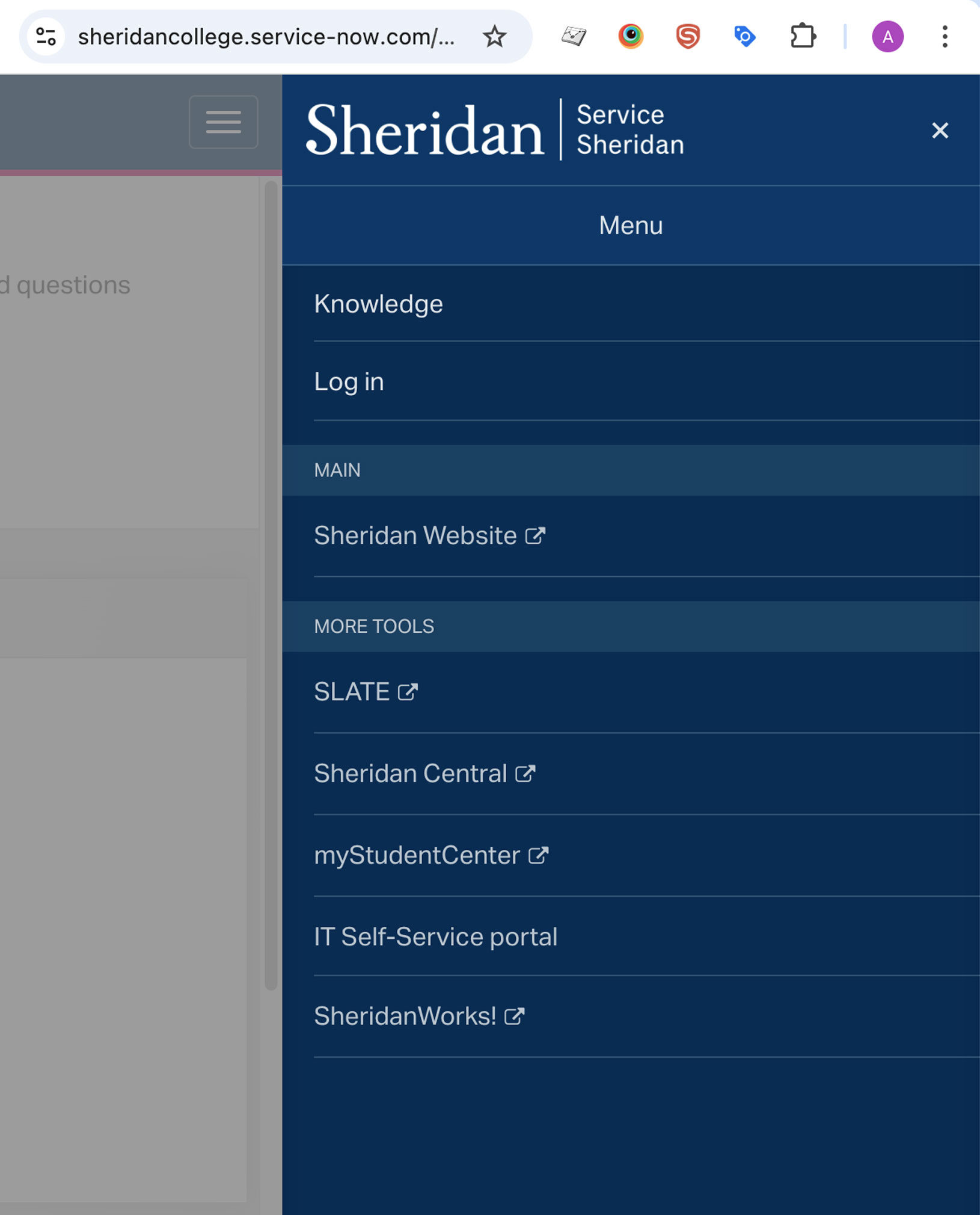
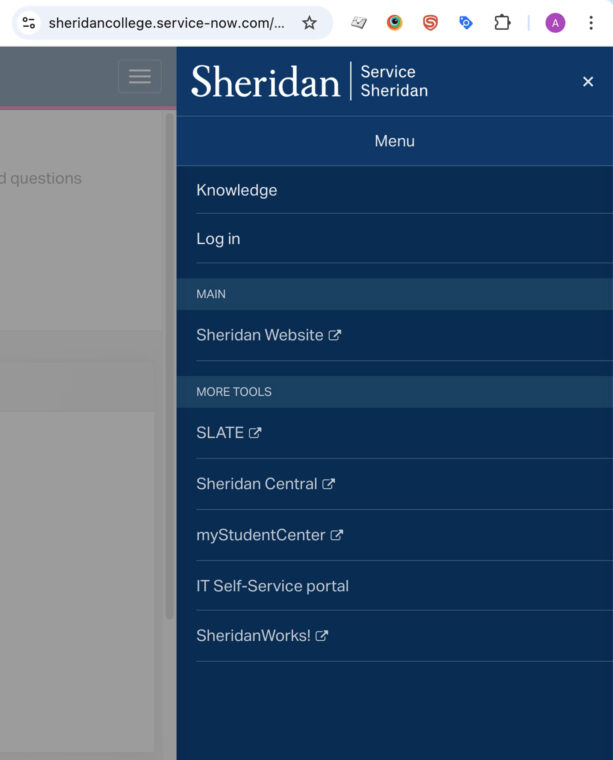
I successfully integrated the SDS mobile menu (MMenuJS) into the ServiceNow theme

It’s always rewarding to receive positive feedback from users and stakeholders.
Notable wins
- Improved brand alignment across Sheridan’s ServiceNow portals
- Resolved a navigation issue issue – some end-user page templates were displaying admin breadcrumbs making navigation confusing for both audience segments. Troubleshooting with AI traced the issue to a user group permissions setting controlling breadcrumb visibility.
- Refined the guest vs. SSO login workflow to spec
Post-deployment, the work received positive anecdotal feedback from users and Sheridan’s ServiceNow admin.
Drupal
Learning Drupal ahead of the migration
Sheridan’s planned moved to Drupal created an opportunity to get ahead of the curve. I’d customized and extended platforms like WordPress before, so the mental model was familiar enough to feel confident taking it one. AI helped me move faster through unfamiliar territory – from environment setup to custom theme development – without getting stuck on platform-specific nuances.
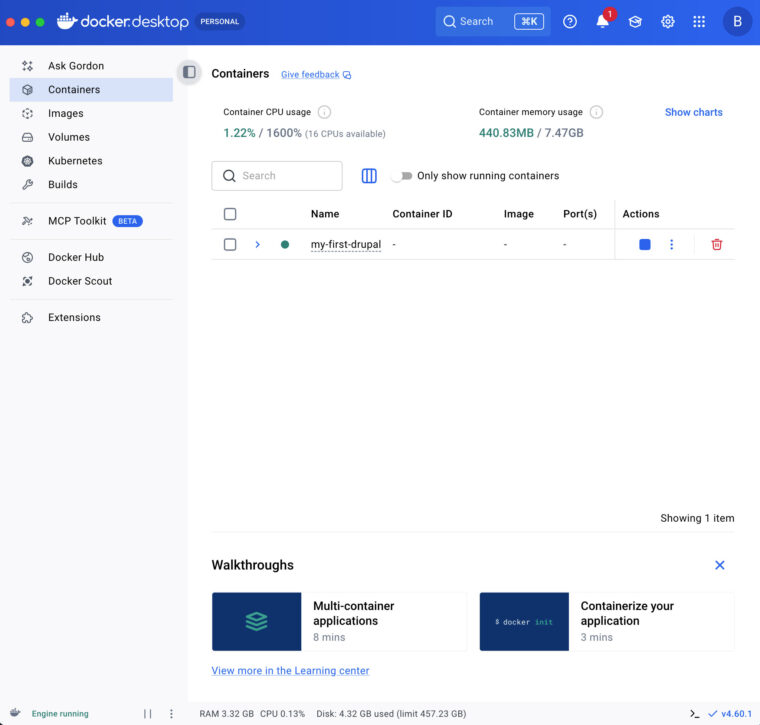
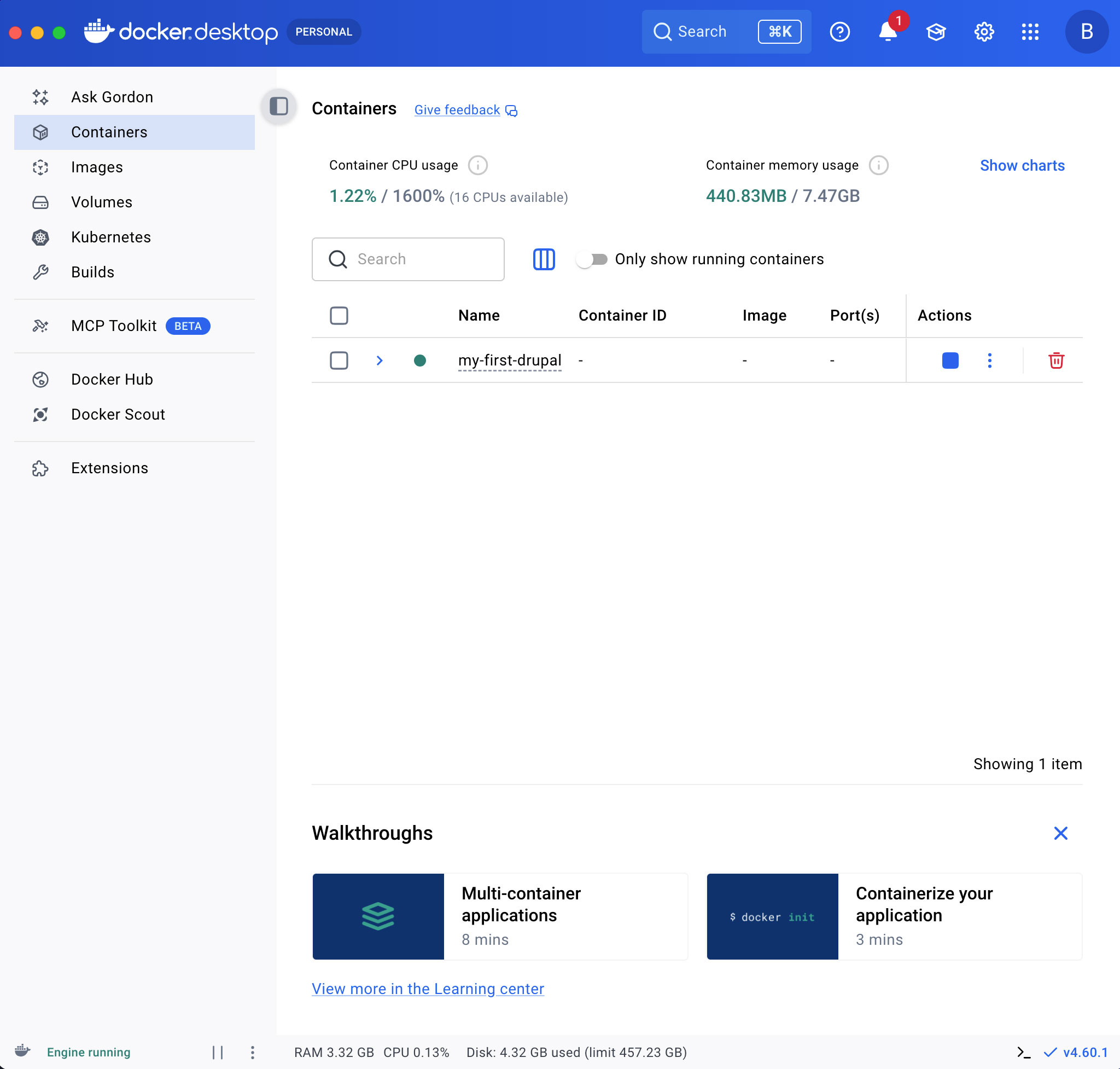
ChatGPT coached me through my first Docker setup.
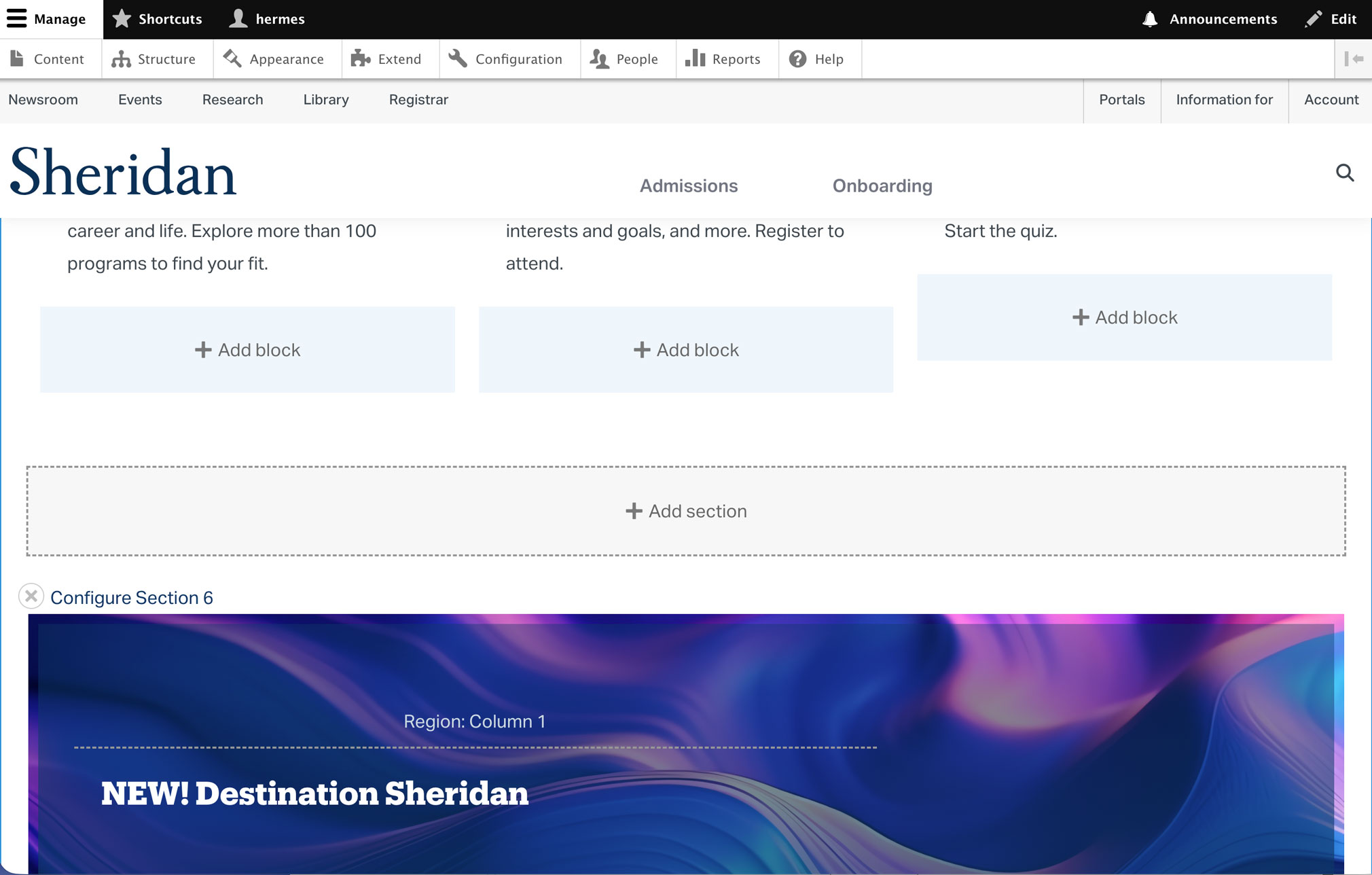
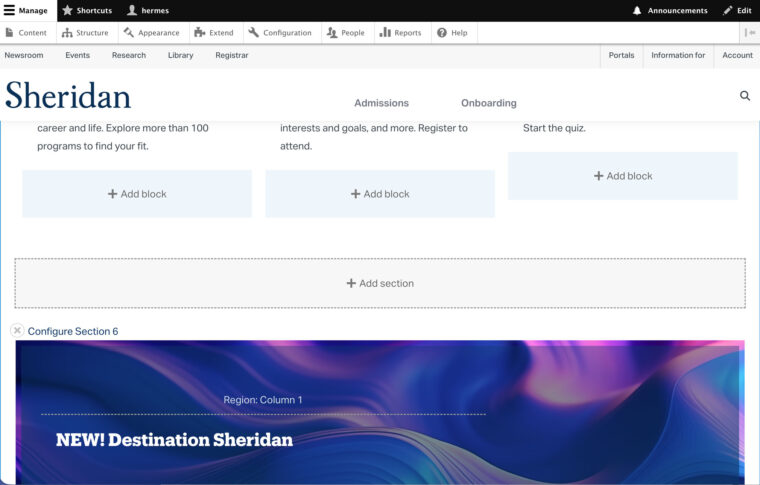
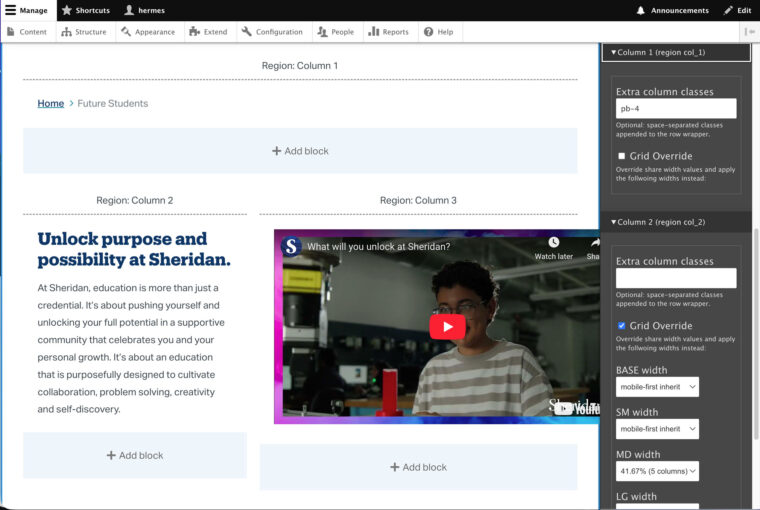
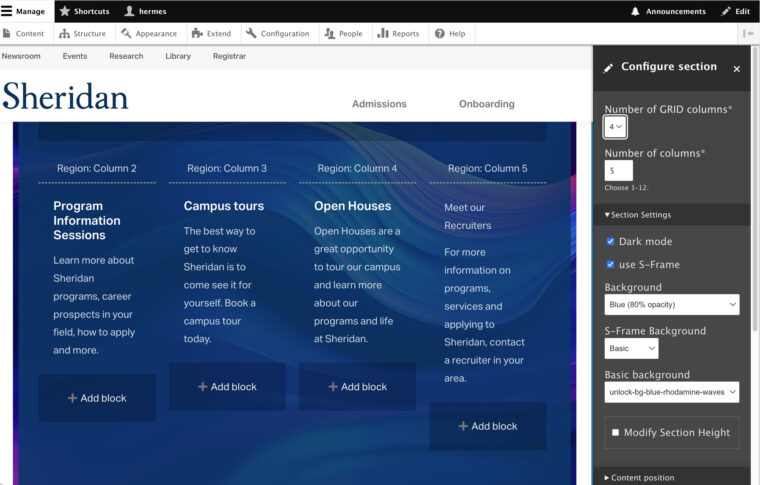
Custom sections: editable Layout Builder components with SDS-inspired configs.
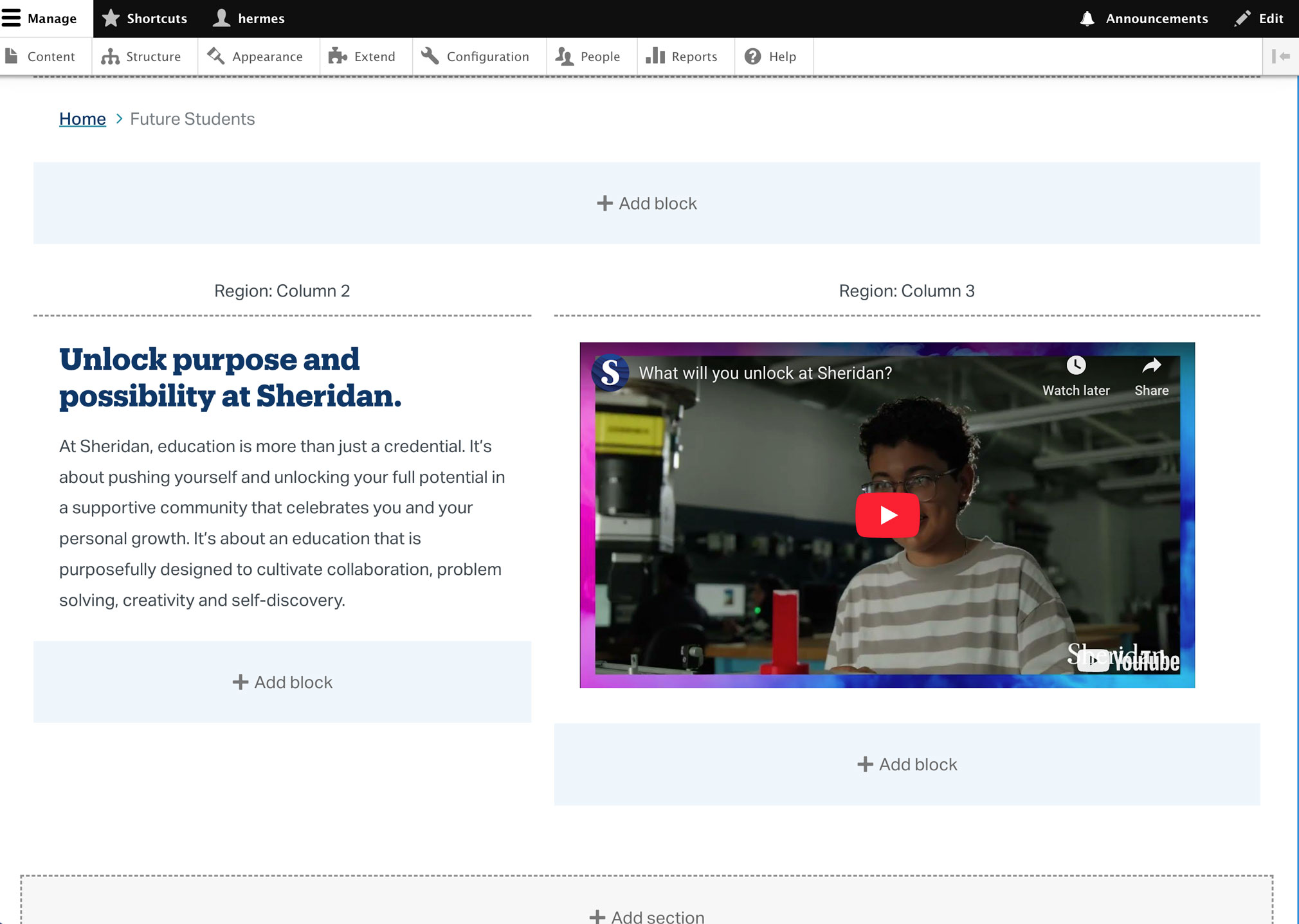
Each custom section supported content blocks in varying, responsive column configurations
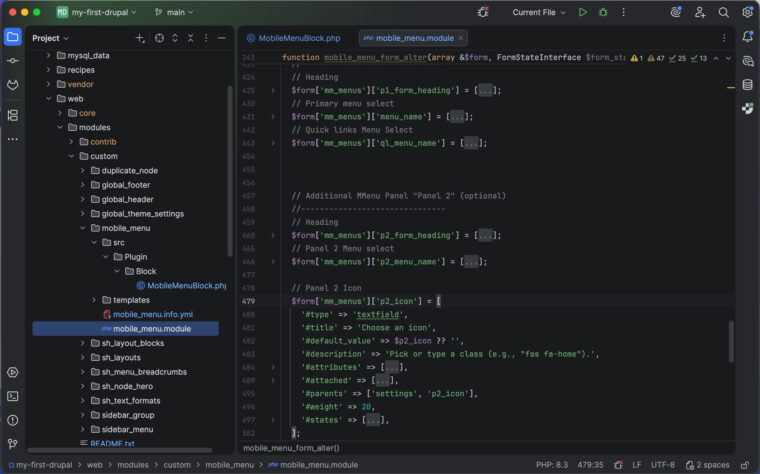
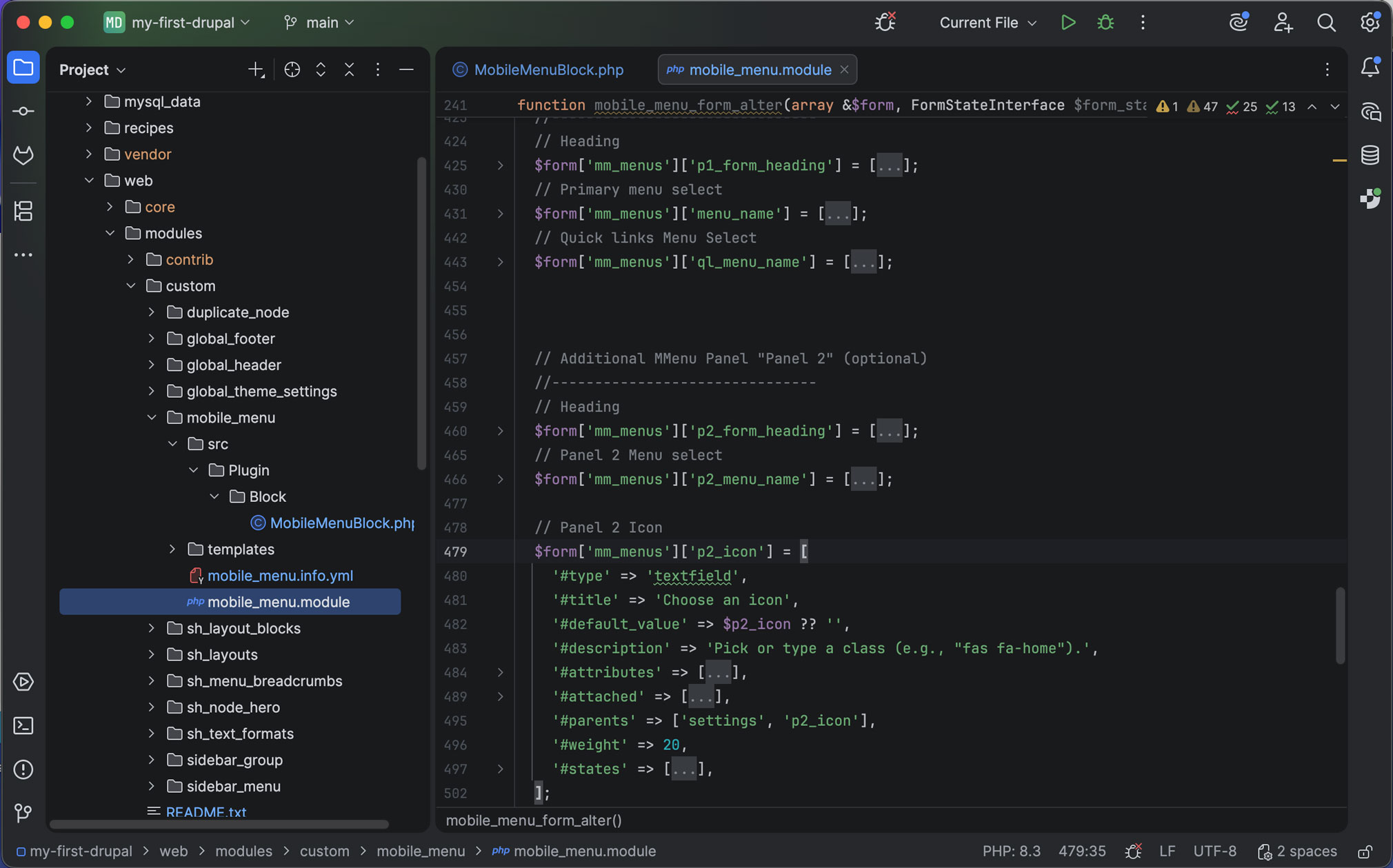
Editor form configs for the custom mobile menu block
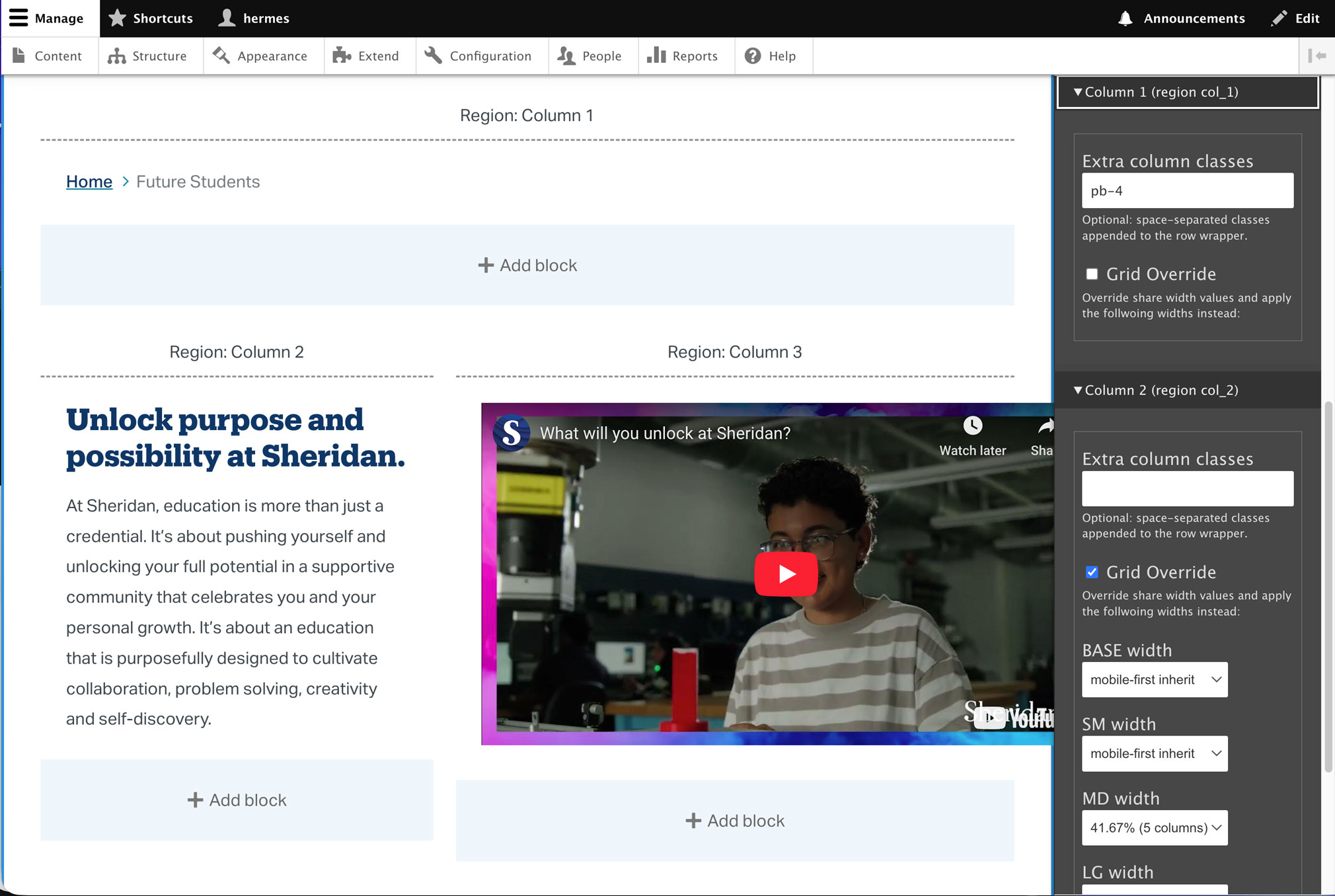
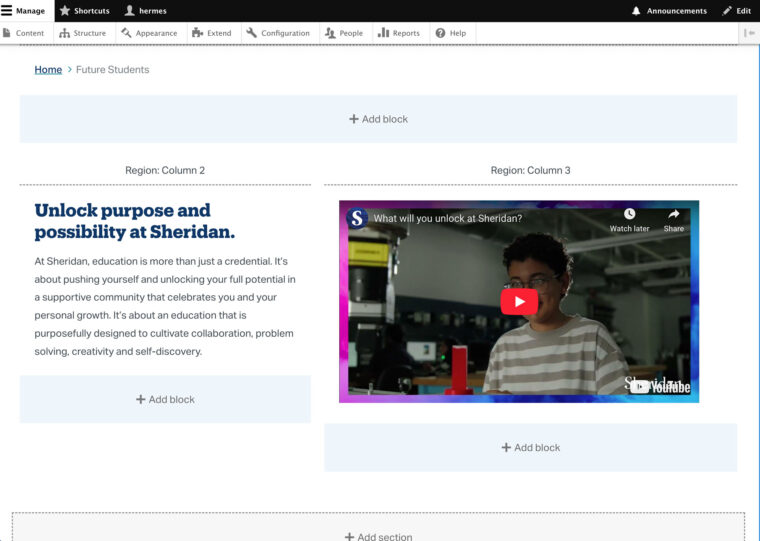
Custom Layout Builder section editor: each column had it’s own optional configs
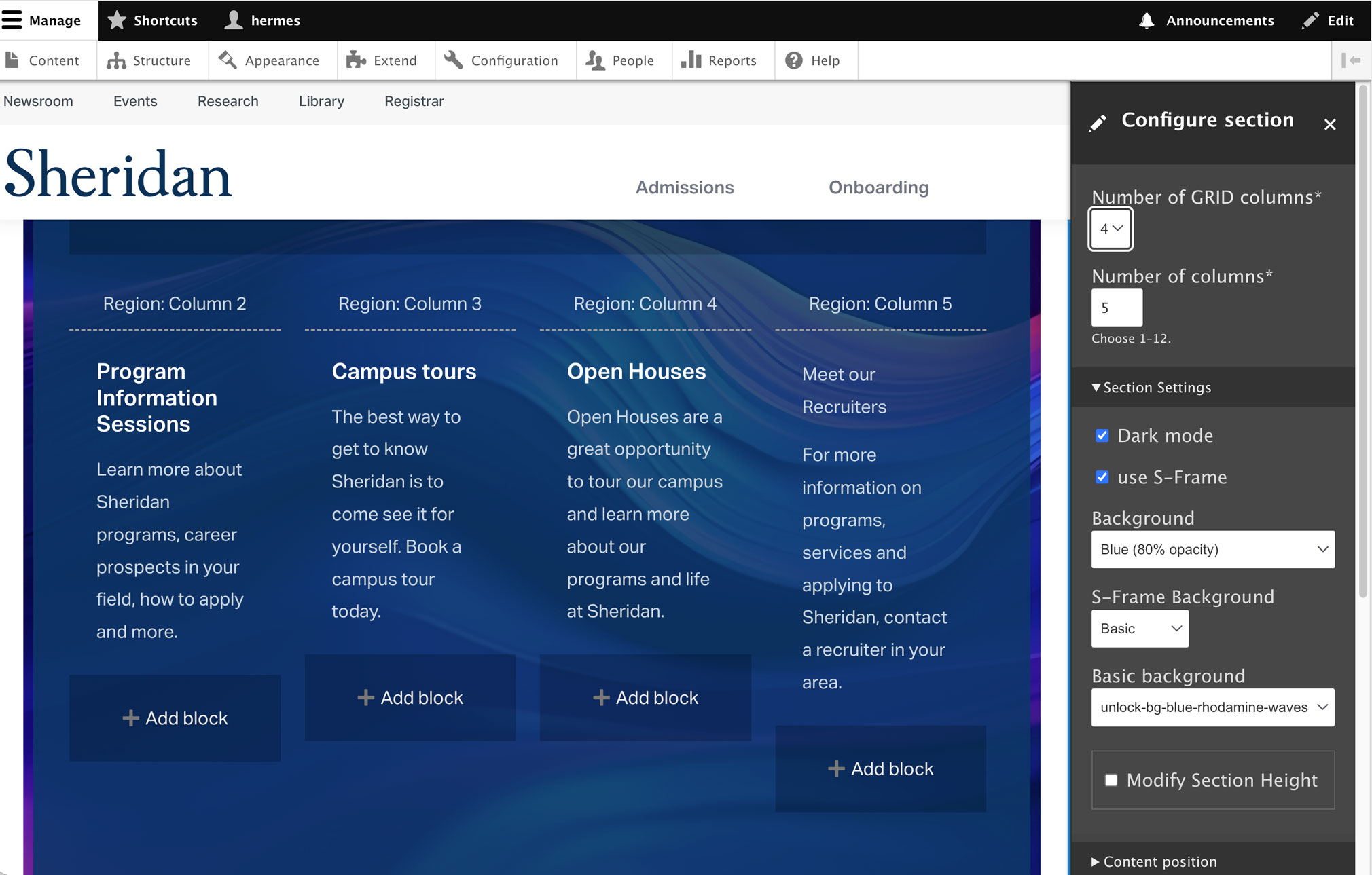
Custom Layout Builder section editor: each section had it’s own configureable SDS styles.
How AI supported learning
AI functioned as an on-demand mentor throughout the build – helping me to work through two recurring questions: “How do I do this?” and “What am I doing wrong?” From setting up a local DDEV environment to building custom Layout Builder components, it shortened the feedback loop at every stage.
Once I had a working mental model of the platform, I could troubleshoot straightforward issues independently, but still relied on AI when tackling more complex customization.
Notable wins
The build was scoped as a learning project, but it became a team resource. I shared it with the rest of the web team, as a Drupal onboarding reference, ahead of the vendor’s delivery of the new site.
- Built a minimal, brand-aligned Drupal theme with a configurable front-end
- Bespoke, customizable global navigation blocks
- Custom Layout Builder sections and blocks
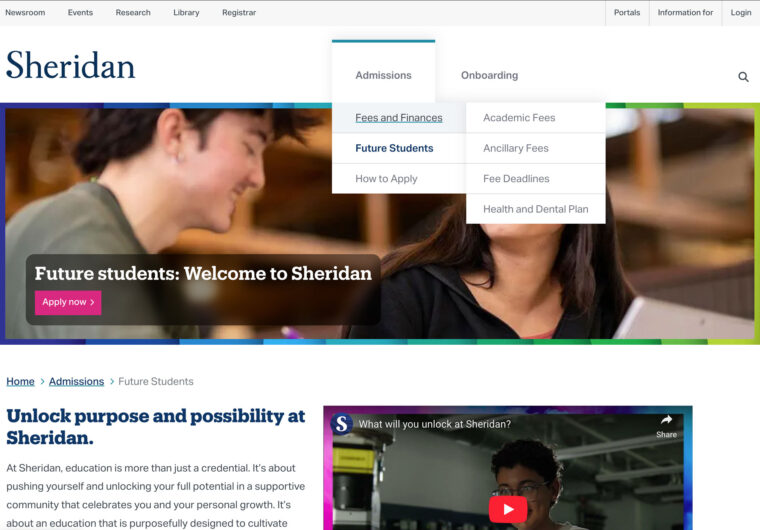

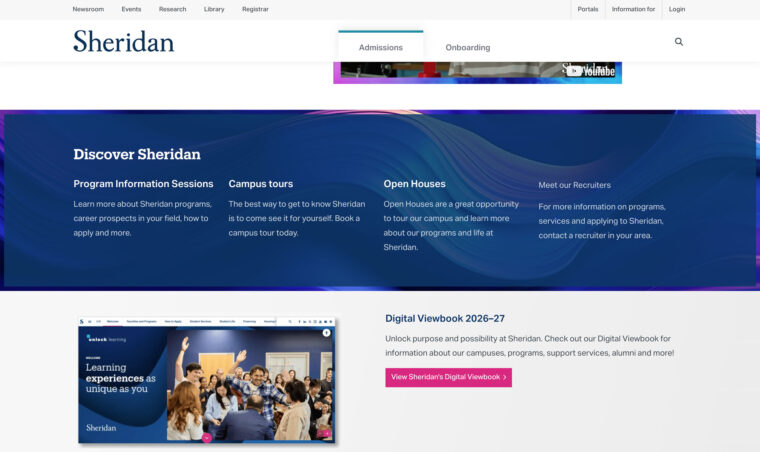
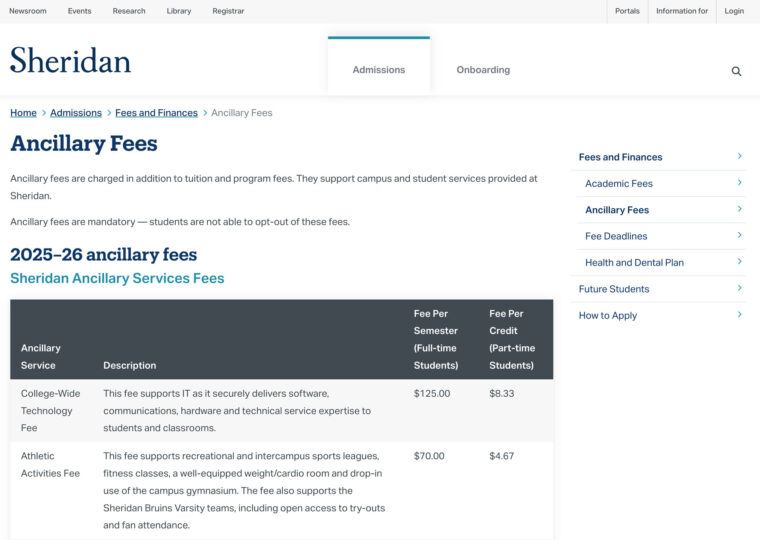
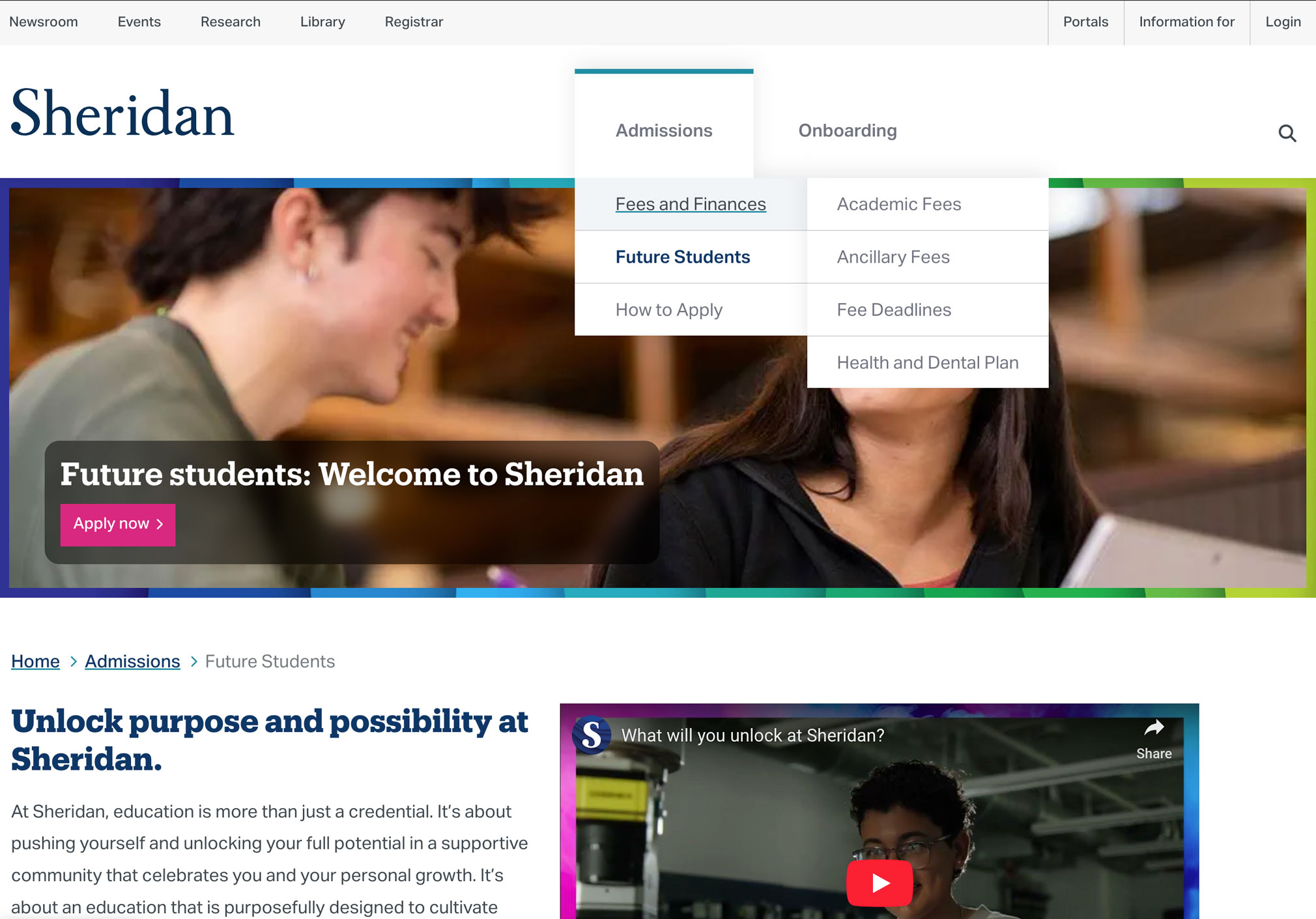
A successfully re-created landing page, based on the Sitecore build. This screenshot also showcases the SDS global header block
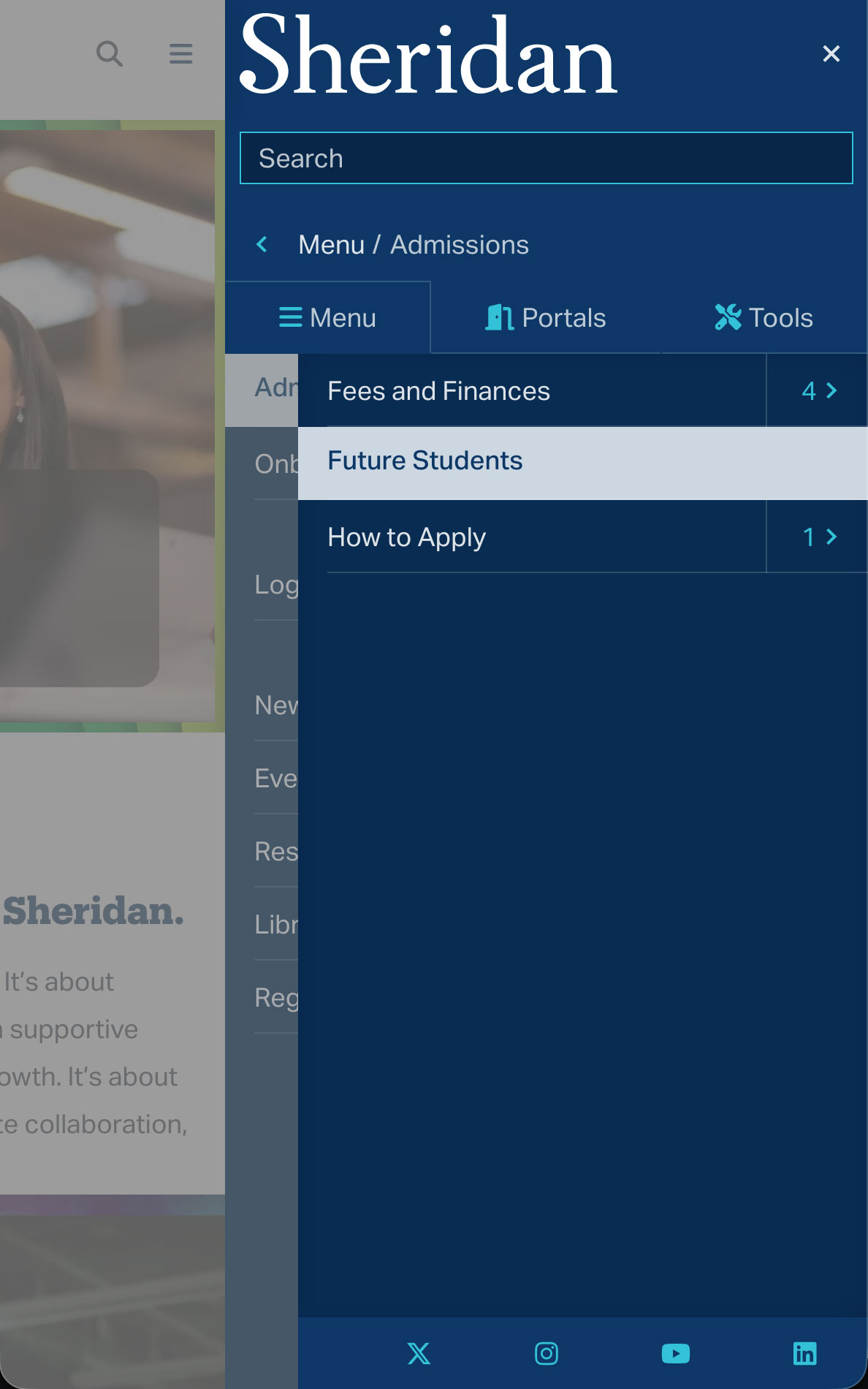
SDS mobile menu (MMenuJS) component was integrated into Drupal build as a custom block.
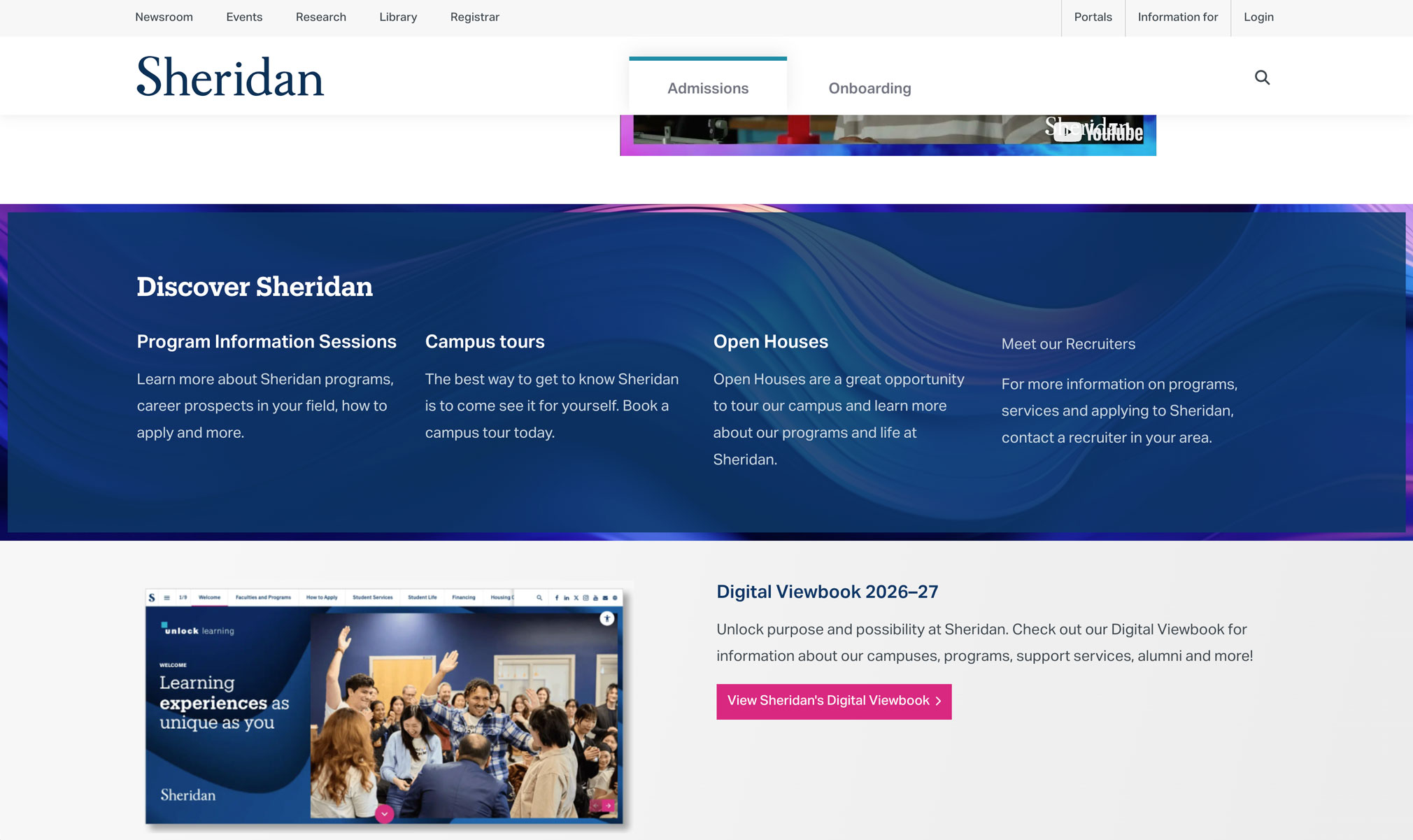
Custom Layout Builder sections rendered on the user-facing front-end
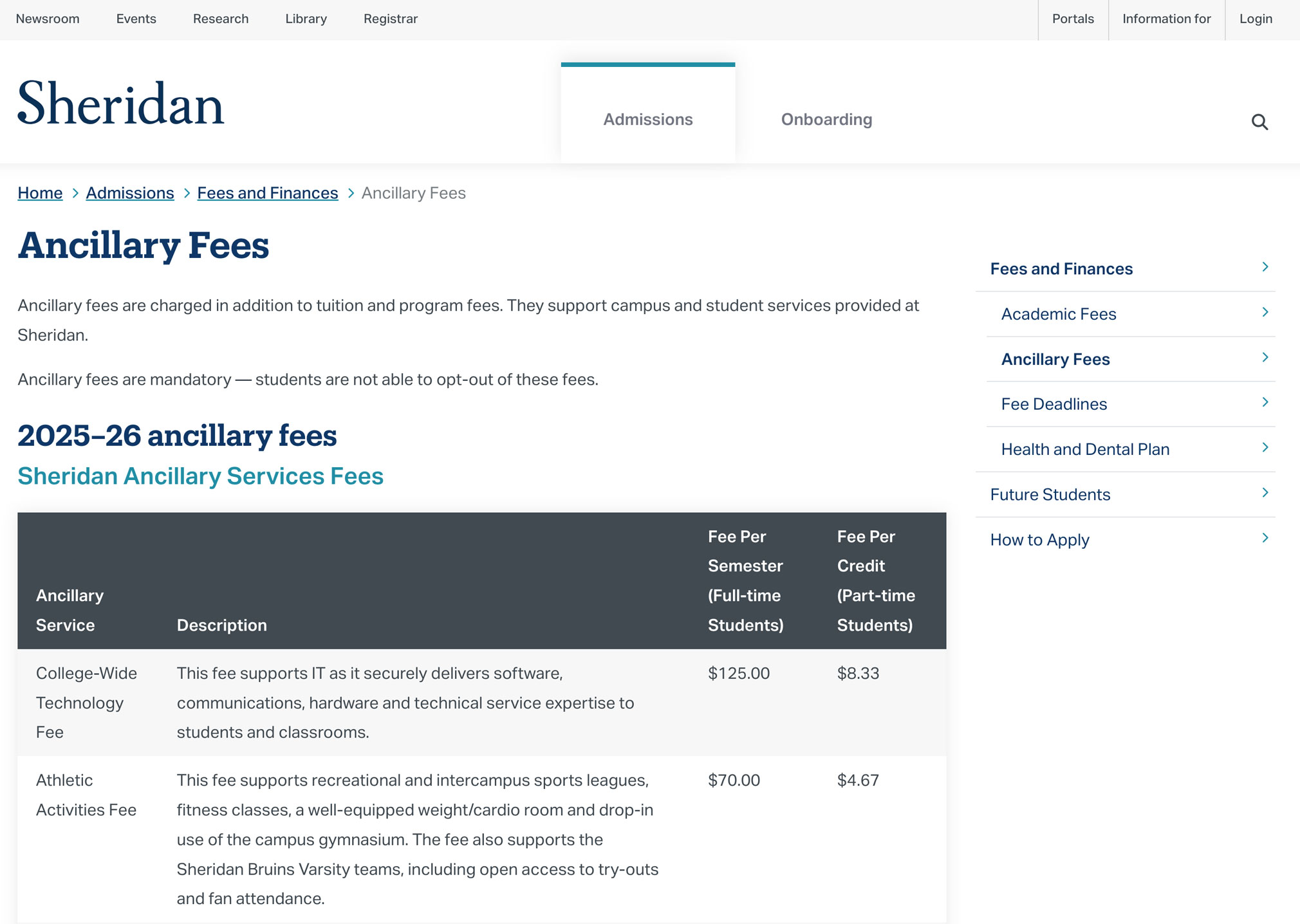
A basic interior content page including a two-tier contextual nav menu in the sidebar.
Insights & Takeaways
Why AI speeds up coding
Coding with AI kept bringing me back to a core UX heuristic: recognition over recall. Evaluating and modifying working code in front of you is fundamentally easier than recalling syntax and structural patterns from memory. In practice: pseudocode or intent goes in, then we review, validate, refine, and integrate the output.
Prompt engineering, learned in practice
LLMs aren’t all-knowing oracles, they’re very capable search assistants that are always trying to please you. The forget contexts in long conversations, and vague corrections rarely improve output. I got the best results by summarizing long threads into fresh prompts, building a meta prompt tuned for programming dialogue, and concrete formatting rules instead of “Don’t do that.”
The bigger lesson came from exploring agentic tools like Cursor. They can feel like having a full-stack developer on call – which is also a risk. Using AI to accelerate output can result in a lack of comprehension, and shipping something you don’t fully understand is a real liability. The goal is to use AI in a way that builds capability – not one that quietly replaces it.